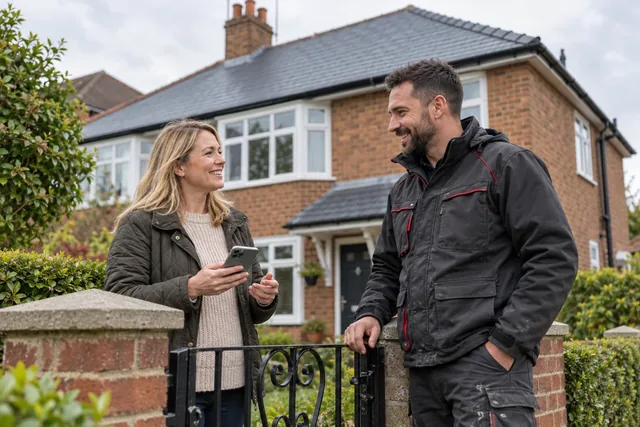

A homeowner searching for a roofer may encounter your business profile before seeing your website. That small space has a practical job: explain who you are, show the type of roofing work you handle, and make contacting you straightforward. Treating it as a complete introduction helps customers decide whether your business fits their problem. A polished logo matters, but accurate information, convincing project photographs and a sensible enquiry process matter just as much.
The most useful starting point is to look at the profile as a customer would. Imagine somebody has noticed water near a chimney and is comparing several roofing companies. Can that person understand your services, check your work and call without guessing which details are correct?
Start with a reliable business record
Create an internal record of your business name, main telephone number, website address, services and genuine coverage area. Use that record whenever you update your online presence. This prevents an old contact number returning when a team member copies information from an outdated document.
Check ownership and access as well. The business should retain control of its profile, with suitable access for anybody helping manage it. Keep recovery details somewhere secure and make account responsibility part of your handover process. A profile is a business asset, so it deserves the same care as your domain name and telephone number.
Before making changes, capture the existing information. A simple screenshot and written checklist let you compare the result, notice accidental omissions and explain what changed.
Describe the work you actually want
A roofing company may offer pitched roof repairs, flat roofing, chimney work and gutter replacement, but those services are not interchangeable for the person searching. Write descriptions that help customers recognise their situation. Explain the work in everyday language before adding specialist terminology.
Be precise about your priorities. If you want more roof replacement enquiries, make sure photographs and descriptions show that capability. If you do not provide a particular roofing system, avoid mentioning it merely because competitors do. More enquiries are useful only when they match the work your team can responsibly deliver.
Google identifies relevance, distance and prominence as factors in local results. Complete, accurate information helps explain the business; it does not remove the effect of location or guarantee a particular position. See Google's local ranking guidance.
Make contact details easy to trust
Call your displayed number from another phone. Check that it reaches the right person or a clear voicemail. Then visit the website linked from the profile and compare the contact information. A customer should encounter one coherent business, regardless of which route they use.
Think beyond whether the number works. Decide who answers during site visits, how missed calls are returned and what information should be recorded. A brief message asking for a postcode, roofing concern and preferred callback time can make follow-up more efficient.
Use truthful expectations. If calls are answered during normal working hours, communicate that clearly. Avoid implying a guaranteed emergency response unless your operation genuinely supports it. Reliable expectations create a better first conversation than ambitious promises the team cannot meet.
Choose photographs that answer questions
Build a small library around the decisions customers make. Include an overall roof view, a close view of relevant details, a tidy finished property and a professional team photograph where appropriate. Photograph the work safely and obtain permission where required.
Select pictures for clarity rather than quantity. A distant roof with no explanation may say little. A well-framed image showing the relationship between a chimney and surrounding tiles gives the viewer more useful context. Keep a record of the project and service associated with each photograph so it can support your website too.
Never present an illustrative image as proof of completed customer work. Keep generated or stock imagery separate from your genuine project portfolio. The distinction protects trust and helps your team know which pictures can support specific claims.
Give customers a straightforward review request
Build feedback into the handover conversation. After discussing the completed work, ask whether the customer would be willing to describe their experience. Provide a convenient link and leave the wording to them.
A useful invitation is simple: thank the customer for choosing the business and explain that honest feedback helps others understand the service. Do not write the review for them or pressure them to mention particular phrases. The strongest feedback often concerns communication, tidiness and explanation as much as the roofing itself.
Reply in a calm, individual voice. Thank people for specific points without revealing private project details. If criticism appears, acknowledge the concern and offer a sensible route to discuss it. A defensive reply can distract future customers from otherwise convincing work.
Connect the profile to a useful website
The next click should help someone continue their decision. Your website needs clear service information, genuine evidence and a visible contact option. Avoid sending every visitor into an unexplained form that asks for more information than necessary.
Consider a hypothetical flat roof enquiry. The customer wants to know whether you assess existing coverings, how you explain options and what happens before a quotation. A relevant service page can address those questions and show suitable examples. The profile introduces the business; the website adds the detail that a small listing cannot hold.
Keep the path consistent on mobile. Check page readability, tap the telephone link and submit a test enquiry. Ask a colleague unfamiliar with the site to find the next step without guidance.
Measure useful conversations
Keep a lightweight enquiry record with source, service requested, postcode, contact outcome and whether a quotation followed. Do not judge the profile solely by how attractive its dashboard looks. The practical question is whether suitable customers reach the business and receive a useful response.
Review enquiries alongside your operating capacity. An increase in distant calls may look positive while creating wasted travel and disappointing conversations. A smaller flow of suitable work inside your genuine coverage area may be more valuable.
Record changes so you can interpret results thoughtfully. If you improve photographs while also changing call handling, avoid attributing every improvement to one edit. Business performance reflects several connected steps.
Keep the profile useful
Assign responsibility for checking the profile whenever services, contact details or working arrangements change. Add meaningful project evidence as it becomes available and remove material that could mislead customers.
Galaxy Roofer Marketing can help roofing businesses bring their local profile, website and enquiry journey into a coherent plan. Start with the information customers need to choose confidently, then build a process your team can maintain. A convincing local presence grows from accurate details and useful evidence, supported by responsive people when the telephone rings.
Explore how these ideas connect with your marketing.
Local SEO for roofing businesses ↗