
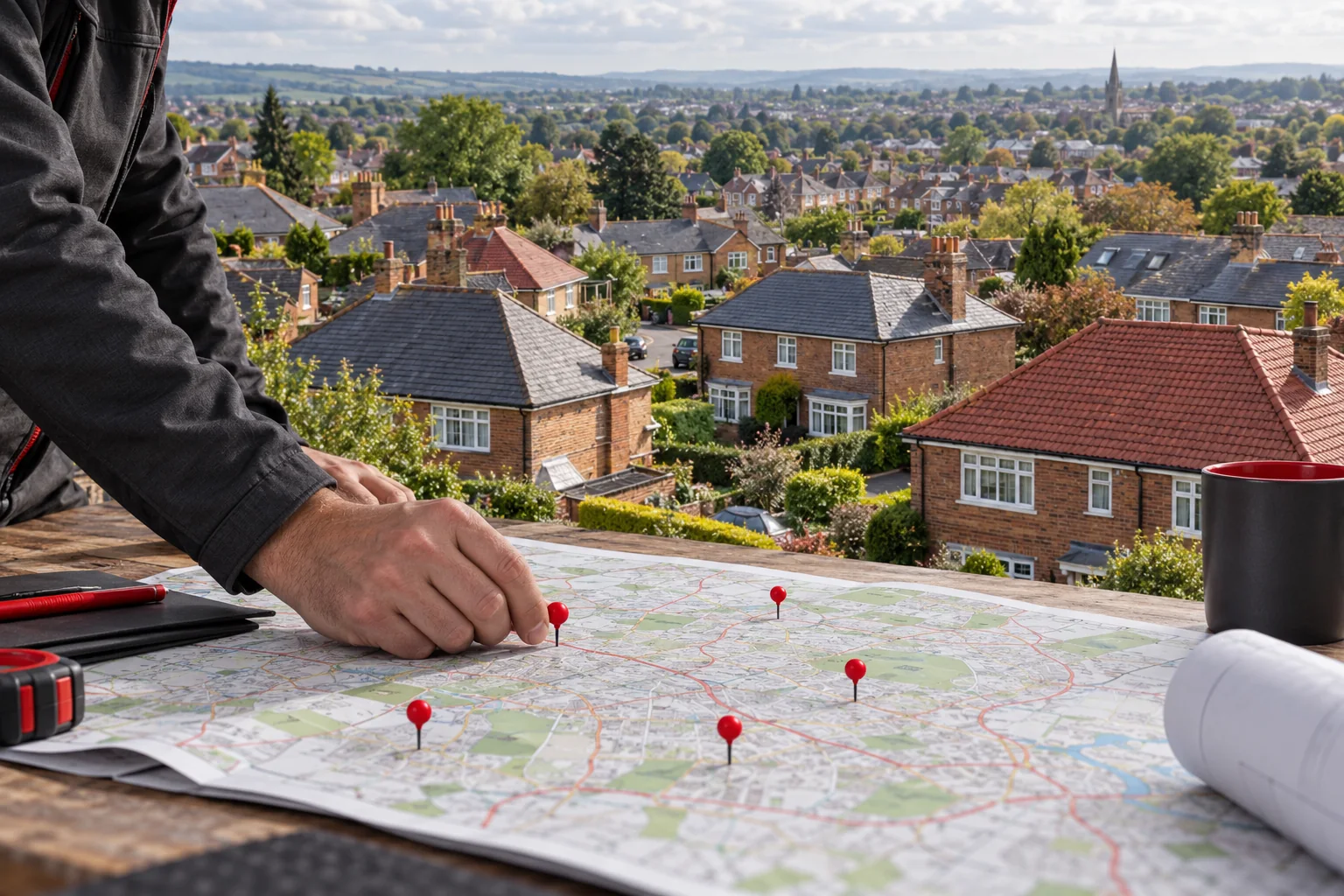
A service area page should help somebody decide whether your roofing business can solve their problem in their location. It needs more than a town name in a heading and a telephone number at the bottom. The strongest pages combine genuine coverage information with clear service explanations and relevant evidence. They respect the reader's time and make the next step obvious.
Begin by asking what a person searching locally actually needs to know. Can your team visit their property? Do you handle their roof type? What happens after an enquiry? Can they see work that demonstrates relevant experience? Answering those questions gives a page a purpose beyond attracting a search visit.
Define coverage before writing
Map the places your business can serve comfortably. Consider travel time, team capacity, supplier access and the type of work you want. The practical boundary for a minor repair may differ from the boundary for a substantial replacement project. Your content should reflect the way your operation works.
Discuss this with the person handling enquiries. They will often know where calls become difficult to schedule or where travel makes small jobs unsuitable. Turn that knowledge into a clear coverage statement rather than an ambitious list of places.
Avoid implying offices where none exist. A service area describes where you travel to customers; it does not establish a local branch. Accurate wording gives readers confidence and prevents awkward questions when they ask to visit an address that is not yours.
Decide whether a separate page is justified
Not every place needs its own page. If several neighbouring areas share the same service offer and you have little distinct information, one useful coverage page may serve customers better. Separate pages become worthwhile when each can provide meaningful local detail.
Useful differences might include documented projects, property access considerations or the types of work your team has genuinely completed there. Be careful with broad assumptions about building styles. Describe observed experience rather than claiming every property in a location has the same roofing issue.
Google's spam policies address doorway abuse, including substantially similar regional pages that funnel people towards the actual useful content. Build each page to help its reader directly. Changing a place name throughout an otherwise identical article is not a customer-focused content strategy.
Give each page a clear job
Write a one-sentence brief before drafting. For example, a hypothetical page might help homeowners in a named coverage area understand how your team approaches roof repairs and requests for assessments. That brief keeps the content focused.
Open with a plain explanation of availability and services. Then explain the questions customers commonly raise before contacting you. Useful topics include how to describe a leak, what photographs can be shared safely from ground level and what information helps arrange an initial conversation.
Do not fill space with generic local history or lists of landmarks unrelated to roofing. Familiar place names can make content appear local without making it useful. Include a local detail only when it changes the customer's decision or explains how the service is delivered.
Explain services without diagnosing remotely
A homeowner may describe a symptom rather than a service. Water staining, loose material or overflowing gutters can lead them to your page without knowing the underlying cause. Explain that an enquiry begins with information gathering and, where appropriate, an assessment.
Keep the distinction between observation and diagnosis clear. You can describe the kinds of concerns your business investigates without promising that a photograph identifies the exact repair. Encourage customers to share what they have noticed and avoid asking them to climb onto a roof.
Discuss the service process in terms your team can honour. Explain how you arrange access, communicate findings and prepare a quotation. Specific, truthful process information is more reassuring than sweeping claims about being the area's leading contractor.
Use evidence that belongs to the area
Relevant project stories help customers understand your experience. With permission, describe the property type, the concern raised, the assessment and the work completed. A general location may provide enough context without exposing a customer's full address.
Pair photographs with useful captions. Explain what the viewer is looking at and why the detail mattered to that project. A finished roof photograph becomes more informative when the accompanying story explains the customer's original concern and the agreed scope.
If you do not have a suitable project example, do not invent one. Publish an honest service explanation and develop the evidence library as work is completed. Clear limitations are better than fictional testimonials, borrowed project photographs or unsupported claims of extensive local experience.
Make navigation feel natural
A local page should sit within a website that is easy to explore. Link it from a coverage section and connect it to relevant service pages. Visitors who want more detail about flat roofing or chimney work should not need to restart their search.
Use link wording that describes the destination. A link about roof repair assessment should lead to that topic, while a project link should open the relevant project story. Keep the number of links sensible so the page remains readable.
Give readers a clear way back to the wider business. Include consistent navigation, a recognisable logo and contact details. A page should feel like part of a professional company website rather than an isolated landing page with no surrounding context.
Build a useful enquiry route
Ask only for information that helps the first conversation. Name, telephone number, postcode and a short description may be sufficient to begin. If photographs are optional, say so and explain that customers should only take them from a safe position.
Set an honest expectation for the response. Avoid promising immediate attendance simply because the page targets a local place. Team availability and the nature of the enquiry still matter.
Offer a telephone option for people who prefer speaking. Test the link on a mobile device and check that form messages reach the person responsible. A carefully written page achieves little when a customer submits an enquiry that nobody sees.
Evaluate pages by enquiry quality
Keep track of which locations and services lead to useful conversations. Look for patterns in unsuitable enquiries, repeated questions or confusion about coverage. Those patterns often reveal the next content improvement.
If visitors repeatedly ask whether a service is available, make the answer clearer. If people expect an office in the area, revise the wording. If a page attracts the wrong work, review whether the headline and examples accurately represent your offer.
Galaxy Roofer Marketing can help organise coverage pages around genuine services and customer decisions. Start with the places your business serves well, build evidence carefully and make every page earn its place. Local content works hardest when it gives a person enough clarity to take a sensible next step.
Explore how these ideas connect with your marketing.
Local SEO for roofing businesses ↗