
An About page gives potential customers a chance to understand the people they might invite to their property. It should answer the quiet questions that a list of services cannot settle. Who will respond to the enquiry? What matters to the business? How does the team approach conversations about unfamiliar roofing work? A useful page builds a recognisable picture through straightforward details. It does not require an extraordinary founding story or grand claims about being the best. Your real working habits can provide the most convincing material.
Begin with the customer’s uncertainty
Imagine a homeowner who has arrived from a service page and wants to know a little more before calling. They may be comparing several roofers and trying to establish who seems clear and approachable. Write for that person rather than for a business award application. Explain who you are, the work you undertake and the kind of conversation an enquirer can expect. Keep those opening details easy to find. A lengthy introduction about your passion may leave the practical questions unanswered.
Ask someone outside the trade to read your opening paragraph. Can they explain the business in their own words afterwards? If they can only repeat phrases such as quality, excellence and commitment, add concrete information. You might explain that enquiries are discussed before an inspection is arranged, if that reflects your process. You might describe the kinds of roof you work with. Choose information that helps a visitor picture the business without promising an outcome that depends on the condition of their property.
Find your story through real conversations
A short interview often produces better material than asking the owner to write a biography. Ask how the business began, what shaped its working approach and what customers frequently misunderstand about roofing. Listen for practical details: learning to explain quotations clearly, organising materials carefully or making time to discuss an inspection. These details can reveal character without manufactured drama. Record the conversation with permission or take notes, then check the wording with the people involved before publishing it.
You do not need to include every milestone. Select the parts of the story that explain how the business operates. If a family connection matters, describe the actual relationship rather than implying generations of trading history without evidence. If the company is relatively new, focus on relevant experience accurately attributed to individuals. Distinguish the age of the business from the experience of its team. A precise account is easier to maintain and gives customers a fair basis for understanding who they are contacting.
Describe roles customers will encounter
Introduce people through the work customers are likely to see. Explain who handles initial enquiries, who may visit the property and how the work is organised. A role description is often more helpful than a list of impressive sounding titles. Use first names, full names or team descriptions according to the people’s preferences and the business’s circumstances. Obtain permission for portraits and biographies. Review the page when responsibilities change so customers are not expecting to meet someone who no longer works there.
Be equally clear about working relationships. An occasional collaborator should not automatically appear as a permanent employee, and a supplier is not part of your employed team simply because you use its products. You can explain that specialist assistance is arranged when appropriate, if that is accurate. Clarity helps customers understand who is responsible for communication. Avoid putting personal contact information or private background details on the page unless there is a clear reason and the person concerned has agreed to publication.
Turn values into observable behaviours
Many roofing businesses value reliability, care and honest communication. These words become more useful when accompanied by examples of the behaviour they describe. If you explain the proposed scope in writing, say so. If you discuss access requirements before work begins, explain that process. Make sure the statement reflects normal practice rather than an aspiration. Customers can use a practical description to prepare for a conversation; a broad claim gives them little to judge before they have met you.
Keep the language proportionate. Saying you explain available options is different from guaranteeing that every roofing problem has an inexpensive solution. Saying you aim to keep customers informed does not require an unrealistic promise of instant responses at every hour. Consider the wording with the person who actually delivers the service. If the page creates expectations the team cannot consistently meet, revise it. A credible About page should make the first conversation feel familiar because the business behaves as the page suggested.
Choose photographs that show real context
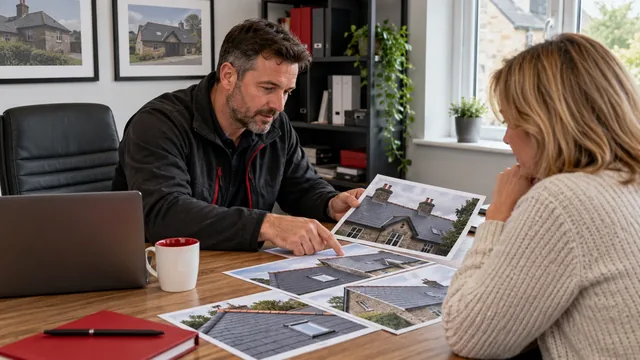
Use a clear photograph of the owner or team where suitable, alongside a recognisable working environment. The image does not have to be elaborate. Good light, an uncluttered background and a natural expression can be enough. Avoid presenting generic stock photographs as your own staff or premises. If you use an illustrative image, ensure the surrounding wording does not imply it documents your company. The page is about identity, so confusing imagery can undermine an otherwise careful account of the business.
A small selection is usually easier to understand than a large collection of unrelated pictures. A team portrait might establish who you are, while a permitted project photograph provides context for the work you discuss. Write useful captions where they add meaning. Check visible vehicle details, house numbers and paperwork before publishing photographs. Choose safe, professional situations rather than asking someone to adopt an unsafe pose for a more dramatic image. The purpose is to make the business recognisable and approachable.
Edit for a consistent human voice
Read the draft aloud. Would the owner comfortably say these sentences during a conversation with a customer? Replace inflated expressions with familiar language and vary sentence length naturally. Choose either a first person or company voice and use it consistently. A small team might sound comfortable saying “we”; a named owner’s introduction might work better in their own voice. Neither approach needs exaggerated informality. The right tone is clear enough to understand and close enough to the actual business to feel believable.
Finish by helping the reader take the next step. Link to relevant services and explain how to make an enquiry, without repeating the entire sales pitch. Check that the business identity and telephone number agree with the rest of the website. Keep a short record of the facts behind the page so future edits remain accurate. Galaxy Roofer Marketing can help turn a straightforward conversation about your business into an About page that feels personal, useful and consistent with the service customers encounter.
Explore how these ideas connect with your marketing.
Websites for roofing businesses ↗