
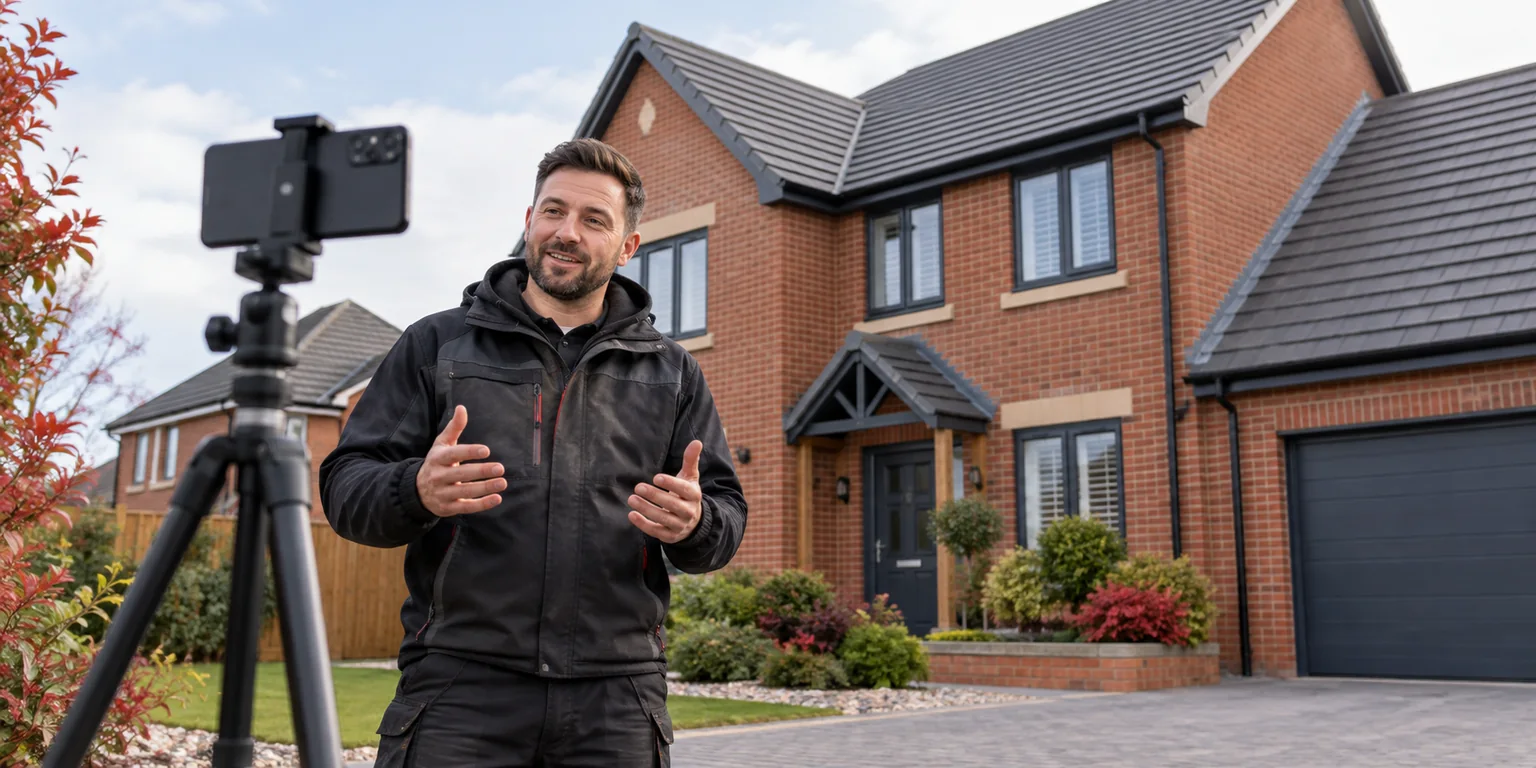
A roofing business does not need a film studio to make a useful social video. It needs a clear message, a relevant example and an easy next step. Homeowners want to understand what you do and whether contacting you is worthwhile. A short, focused video can introduce those points through the people and work behind your company.
The difficult part is usually deciding what to leave out. Trying to cover every roofing service, every company credential and every customer concern in one recording creates a busy advertisement. A better starting point is one service and one customer question. Build a simple video around that question, then connect it to a page or enquiry process that provides the detail.
Decide what the viewer should understand
Write one sentence describing the job of the video before filming. For instance, a hypothetical roofing contractor might want homeowners to understand that the company handles planned tiled roof replacements. That is more precise than wanting “more awareness”. It guides the project footage, spoken introduction and final invitation.
Choose a message that fits your actual operation. If you mainly undertake planned work, do not build the video around immediate emergency availability. If you want domestic enquiries, use examples that help homeowners recognise their own situation. A clear objective prevents attractive but irrelevant footage from taking over the advertisement. It also gives you a practical basis for judging the enquiries that follow.
Use a simple story structure
A useful sequence introduces the service, shows evidence and explains the next step. The opening might show a completed roof while a team member describes the type of work. Supporting footage can add context from the project. The closing should tell viewers how to discuss a similar requirement with your business.
You do not need a dramatic storyline. In a hypothetical example, the business owner could explain that the featured property needed a replacement roof, show the completed work and invite viewers to provide their service area and requirements. Keep the explanation factual. Avoid claiming that every property needs the same solution or that one filmed project establishes a result you can guarantee elsewhere.
Plan footage around real working conditions
Collect material as part of an agreed project documentation process. A ground-level introduction, an authorised view of the finished roof and a brief office explanation can provide enough variety. Marketing filming should fit around safe working practices and the customer's permission rather than interrupting the job.
Make a short shot list so the team knows what is needed. Include a clear opening view, one or two supporting details and an uncomplicated closing shot. Check the background for private information, vehicle registrations or people who have not agreed to appear. Keeping the list modest makes it more likely that usable footage is collected consistently instead of becoming another task everyone postpones.
Make the message understandable without sound
People may encounter your video where listening is inconvenient. Use accurate captions for spoken words and ensure the visual sequence still makes sense without narration. Watch the full advertisement with the sound muted. Can you identify the service and understand what the viewer is being invited to do?
Keep any on-screen wording readable and brief. A small amount of clear text is more useful than a paragraph placed over a roof photograph. Leave important information away from the outer edges, where cropping or interface elements may interfere with it. Check every version you intend to use rather than assuming one export will fit every placement equally well.
Show people without forcing a performance
A team member can make a roofing company feel more approachable, but they do not need to deliver an elaborate script. Give them a specific question to answer in their own words. “What type of project is this?” is easier to respond to naturally than a long paragraph full of marketing language.
Record in a quiet, appropriate setting and keep background noise manageable. If someone is uncomfortable appearing on camera, consider a voiceover or a sequence of project footage with captions. The important point is usefulness, not performance. Avoid pretending that a team member is a customer, and do not present staged praise as an independent testimonial. An honest introduction is enough.
Match the call to action to the service
The final invitation should reflect how your business handles enquiries. A planned roof replacement might call for a discussion of the property and an assessment. A specific repair service might begin with a phone conversation about the issue. State what happens after contact so the viewer can decide whether to proceed.
Then check the destination. If the video discusses flat roof replacement, the linked page should continue with relevant information about that service. Include a clear phone link and a straightforward explanation of your coverage. Avoid creating urgency that the office cannot honour. A modest invitation with a reliable follow-up process is more useful than a strong promise that creates mismatched expectations.
Build different versions around real questions
One project can support several different videos without repeating the same message. An introduction could focus on the type of property. Another could explain how your enquiry process works. A third could show the completed result with a short description of the service. Each version should have its own clear purpose.
Keep a record of what changed between versions. If you compare two openings, try to hold the service and destination steady. Otherwise you may confuse the effect of the edit with a difference in audience or offer. Treat the exercise as learning what helps homeowners understand your business, rather than searching for a single supposedly perfect video formula.
Assess the conversations the video creates
Views and reactions describe attention, but they do not establish whether a video is attracting suitable roofing enquiries. Record the requested service, property location and outcome of each relevant conversation. Ask the office whether callers understood the advertisement or arrived with assumptions that needed correcting.
These observations can reveal useful improvements. If people repeatedly ask for a service you do not provide, the opening may be too broad. If they expect an immediate appointment, the closing might need clearer wording. If enquiries are suitable but difficult to reach, review the follow-up process before blaming the footage. Advertising and office handling need to work together.
Keep a repeatable production process
Save the original footage, approved edit, caption file and permission record in a consistent folder structure. Note the service and message each video supports. This makes future changes easier and reduces the risk of using an old offer or unapproved image in a new campaign.
Before launch, review the video on a phone from beginning to end. Check captions, cropping, volume and the linked destination. Ask someone unfamiliar with the project to explain what they think the advertisement offers. Their response can expose assumptions that the team has stopped noticing because it already knows the business so well.
Start with useful rather than elaborate
A clear roofing video gives homeowners a reason to pay attention and a sensible way to find out more. Begin with a real service, a small set of relevant shots and an accurate explanation. Improve the message as you learn from the enquiries, while keeping the production process manageable for your team.
Galaxy Roofer Marketing can help shape that content into a connected social advertising journey. The aim is to make your work easier to understand and your next step easier to take, using the people and projects that already make your business distinctive.
Explore how these ideas connect with your marketing.
Social advertising for roofing businesses ↗