Continue the promise of the advert
A landing page should make sense immediately to the homeowner who has just clicked your advert. If the advert offers flat roofing services, the page should explain flat roofing rather than requiring visitors to search through an unrelated company story. Start with a clear statement of the service and the area you cover. Explain who the service is for and provide an obvious next step. This continuity reduces uncertainty and helps visitors decide whether contacting you is worthwhile. The page does not need to answer every roofing question, but it should resolve the most important questions surrounding the advertised service.
Write for the homeowner's situation
Homeowners usually arrive with a problem or a project, not a desire to study a roofing company's marketing language. Describe familiar situations in plain terms: a recurring leak, a worn garage roof or plans to replace an ageing roof covering. Explain how your assessment helps establish the appropriate work. Avoid diagnosing a property before inspection or implying every problem requires the largest possible project. Useful copy demonstrates understanding while leaving room for professional judgement. It also makes the enquiry more productive because the visitor knows what information to provide and what your team needs to establish on site.
Make contact straightforward
Give visitors a clear way to call and a clear way to request a response. Use a visible telephone number, a descriptive contact button and a form that asks for useful information without becoming an application process. Name, contact details, location and a short project description may be enough to start the conversation. Explain when and how you normally respond if the business has an established process. Only publish response commitments you can maintain. A confident page can lose enquiries if its contact options are difficult to find or if visitors cannot tell what happens after pressing the button.
Show evidence you can substantiate
Real project photographs, clear service descriptions and accurate business details help homeowners evaluate your company. Use reviews only when you have permission and can represent them faithfully. If you mention memberships, qualifications or insurance, check that the wording is accurate and applicable. Avoid filling the page with impressive sounding badges that visitors cannot verify. Evidence works best when it answers a specific concern, such as experience with a similar roof type or clarity about the assessment process. A smaller amount of genuine, relevant information is more useful than a collection of unsupported claims about being the best.
Explain the process before asking for trust
Describe the steps from initial contact to a proposed scope of work. Explain what your team asks, when an assessment may be appropriate and how a written quote is prepared. Homeowners may be unfamiliar with roofing work and uncertain about inviting a contractor to inspect their property. A practical explanation reduces that uncertainty. Be clear about any conditions that influence the process, such as access requirements or whether an initial visit carries a charge. Do not imply that all projects follow an identical path when complex access, shared buildings or specialist materials may require additional assessment.
Use photographs with a purpose
Choose images that support the service being advertised. A page about flat roofing benefits from relevant roof details or a suitable project photograph, while a broad scenic image may communicate very little. Add concise descriptions when they help explain the work shown. Do not present stock imagery or illustrative visuals as completed customer projects. Keep image files suitably prepared so they do not make the page unnecessarily heavy. The visitor should be able to understand the service and reach the contact options easily. Images should add confidence and context without becoming an obstacle between a homeowner and a useful conversation.
Design for a person using a phone
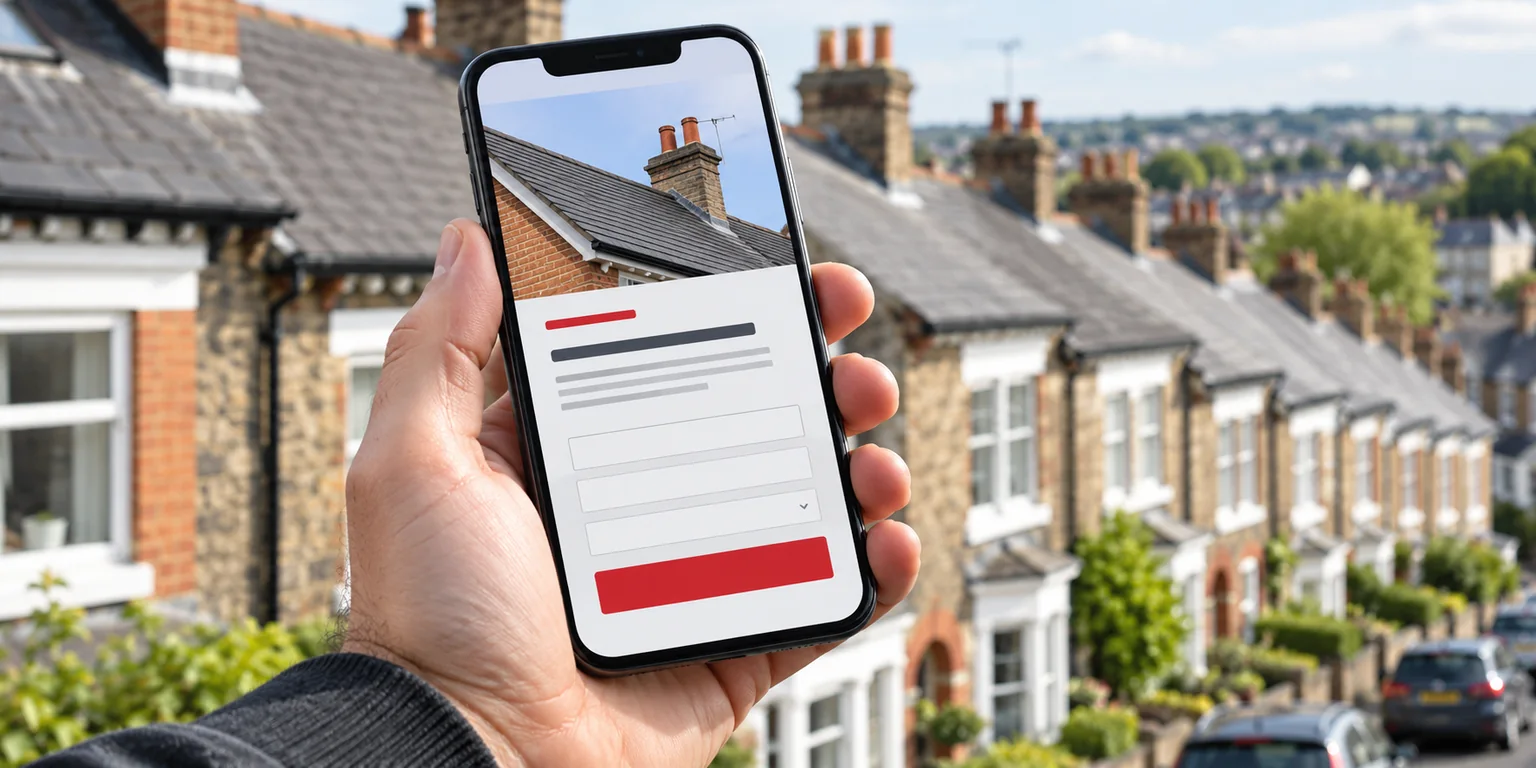
Consider how a homeowner reads the page on a small screen while dealing with a roofing problem. Headings should be readable, paragraphs manageable and buttons easy to use. Test the telephone link and form on an actual mobile device. Check that navigation does not cover essential information and that important text remains legible over images. Do not assume the desktop layout will simply shrink into a good mobile experience. A page can look polished in a large preview while making basic tasks frustrating on a phone. Practical usability matters more than adding another decorative effect or animation.
Address useful questions clearly
A short question section can deal with issues that commonly delay contact. Explain the working area, the kinds of property you serve and what information helps your team assess an enquiry. Discuss project timing carefully without promising availability you cannot guarantee. If prices depend on inspection, explain the factors that shape a quote rather than inventing a universal figure. Each answer should help the homeowner make a decision or prepare for the next step. Avoid adding questions purely to increase page length; repeated sales statements disguised as answers make a page longer without making it more helpful.
Reduce distractions around the main action
A landing page can provide reassurance without offering every possible route through the website. Decide which action matters most for the advertised service and make it consistently available. Links to related information can be useful, but excessive menus, competing offers and repeated popups can interrupt the visitor's progress. Look at the page from the homeowner's perspective and ask whether each section helps them understand the service, assess the business or contact you. Remove elements that have no clear role. A focused page feels easier to use because its structure supports the task the visitor arrived to complete.
Improve the page using real enquiries
After publication, listen to the questions people still ask before booking an assessment. Repeated confusion about coverage or services suggests the page needs clarification. Review whether visitors submit enough information for a helpful response and whether contacts match the advertised work. Make changes with an explicit reason and check that forms and phone links continue to work afterwards. The most useful landing page is not a finished brochure that nobody revisits. It is a practical part of your enquiry process, refined through real conversations so suitable homeowners can understand your offer and take the next step with confidence.
Check small details before promoting the page: spelling, contact information, form confirmation messages and the destinations of buttons. Ask someone unfamiliar with the business to find the service area and request a quote. Their hesitation can reveal a problem that the owner overlooks through familiarity. Fixing these practical points helps the page support the professional impression your roofing team wants to make.
Explore how these ideas connect with your marketing.
Google Ads for roofing businesses ↗